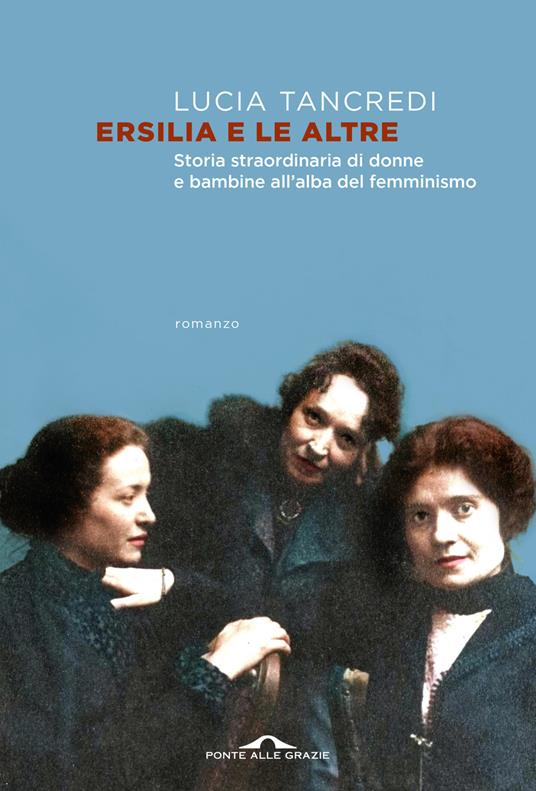
In 1859, under a sky torn by the greatest solar storm ever recorded, Ersilia arrives: she is the daughter of incandescence. And with that light in her eyes she grows up, orphaned by her mother, among the shadows of poverty. His Milan is that of the end of the century, a city that runs and consumes itself in the urgency of modernity, where little girls – the piscinine – are in the streets like stray dogs. Apprentice milliners, little seamstresses, girls who grew up too quickly and without any protection. It is there, in those alleys crowded with poverty, that Ersilia understands what she wants to do: protect the youngest, educate them, emancipate them. She married Luigi Majno, a socialist and feminist lawyer before the term gained citizenship. She joins the tireless work of the pioneers: Laura Solera Mantegazza’s Nursery School, and Alessandrina Ravizza’s Midwifery. Every woman she meets is a flower in the fertile soil of her sisterhood. From Anna Kuliscioff, Turati’s companion, a socialist lynx, Ersilia quickly learns: it’s all or none. From his daughters, whom he loves with a fierce tenderness, he understands that it is better to do things wrong than to do nothing at all. And so, in 1899, she and her companions founded the Unione Femminile, the first organization in Italy for the emancipation of women, through which truly everyone would pass: from Ada Negri to Maria Montessori, from Eleonora Duse to Sibilla Aleramo. Shortly thereafter, the Mariuccia Nursery was also founded, a secular and free refuge for every abused and forgotten girl. With great narrative finesse and historical sensitivity, Lucia Tancredi delivers a poetic and intense portrait of a group of women who were able to imagine a different world.